Total Pageviews

Showing posts with label book. Show all posts

Monday, January 16, 2012

YA Fantasy Author, Barbara C. Burgess Shares Insight into Her New Book, The Magic Manuscript: Book One - Voyage to Eve Ilion


I’m a Canadian writer and freelance editor. In 1983, I received my Bachelor of Arts in English Literature from McGill University, Montreal, Canada. I was First Class Honours in English and “University Scholar.” At McGill, my Honours thesis was on the influence of the German romantics on the Scottish fantasy writer George MacDonald. In the MA English Literature program at McGill, I focused on medieval romance literature. My thesis advisor, Professor Paul Piehler, had been mentored and tutored by C. S. Lewis (British author of the Narnia books) in Oxford, England. (Piehler has contributed a chapter to the book C. S. Lewis Remembered: Collected Reflections of Students, Friends and Colleagues.) Recently, The Magic Manuscript: Book One – Voyage to Eve Ilion was reviewed by Paul Piehler. I was honoured that Professor Piehler wrote such an insightful review, and I was especially touched because when I was in university, his ideas about allegory and literature had a profound influence on my thought and writing.


In 2002, I worked briefly as the assistant to the Executive Director of the Federation of BC Writers in Vancouver, Canada. Over a period of five years, I taught English to international students at a private ESL school in Vancouver. Currently, I write and edit on a freelance basis. I am the deputy editor of Writing Edge Magazine, an Australia-based international magazine, to which I also contribute articles. I judge in writing competitions.
Tell us about the genre of your work. 

C. S. Lewis's words: “I wrote the books I should have liked to read” deeply resonated with me. I decided to write the kind of YA (young adult) fantasy book that I would have enjoyed reading.

In The Magic Manuscript: Book One - Voyage to Eve Ilion, many magical transitions recur. The main characters, Jennifer and Arthur, are transported to other times and, indeed, other worlds. This book is intended for young adult and adult readers who appreciate YA fantasy literature. We’ve seen in the new millennium a notable spike in young readers’ interest in paranormal literature, for example, Stephenie Meyer’s vampire-romance Twilight series. But not all teens are grabbed by tales of vampires, werewolves, and ghosts; some young adult readers may well gravitate more towards the lighter shade of paranormal literature. The genre “paranormal” is very wide and may also include stories about fairies, angels, telepathy, superpowers, wizards, reincarnation, and time travel. Those were the aspects of fantasy literature that captivated my interest when I read YA books, and so I decided to incorporate them into my book. There are faeries, superpowers, wizards, reincarnation, and the whole plot centers on time travel.


Why did you choose this genre?
I grew up with the following books by George MacDonald: At the Back of the North Wind, Phantastes, The Princess and Curdie, and The Golden Key. I read and reread C. S. Lewis’s Narnian books, as well as his fiction for adults, such as his science fiction trilogy and the novel Till We Have Face (Lewis's retelling of the Greek myth of Cupid and Psyche.) The concept of entering another dimension via a seemingly mundane portal in this world fascinated me, and writers like C. S. Lewis and George MacDonald first opened that magical door for me. For instance, in The Lion, the Witch, and the Wardrobe, Lucy enters the world of Narnia after darting into the back of an old wooden wardrobe while playing hide and seek with her siblings. In Phantastes, the main character steps out of bed one morning and finds that he is standing, not on his floral-printed green carpet, but on a grassy "sward" or lawn; suddenly, he has entered Faerieland. C. S. Lewis wrote that after he began reading Phantastes, he was overwhelmed and knew he "had crossed a great frontier."  I think that fantasy novels in particular offer the gift of entry into the imagination through which one can cross fantastic frontiers.

What are some of your books, stories that have been published?

The Magic Manuscript: Book One - Voyage to Eve Ilion was published by Piraeus Books in the USA in June 2011. Two novellas were published last year in Australia. The first was Suzanne and the Maharaja's Son, a story set mainly in India. The second was A Weekend on Monte Bianco, a story set entirely in Italy.  I've written a number of article, including: "The Early British Adventurers in India," “Paranormal Romance for the Young Adult Market”, and “Cold Prevention”; I write a health column and sometimes judge in writing competitions.

What ages do you direct your books?

My young adult fantasy book is intended for an audience aged 12-18. There are many adults who like YA fantasy literature, so my latest book can certainly be enjoyed by readers from ages 11 to 100 and more! The two novellas and all of my articles have been written for adults, while I have a picture book {Minnah Kim’s Piano-Playing Pet Parrot) and a chapter book (A Cat Called Good Morning) which I hope to publish soon for younger children.

Give a description of each, and where they can be found.

It turns out that there are several authors by the name of Barbara Burgess, so I use the initial “C.” to distinguish me from them; hence, people can do an online search for me under “Barbara C. Burgess”.

The Magic Manuscript: Book One - Voyage to Eve Ilion by Barbara C. Burgess
ISBN-10: 0983185379
ISBN-13: 978-0983185376
is available as a paperback at the following websites:

http://www.amazon.com (USA)
http://www.amazon.ca (Canada)
http://www.piraeusbooks.com (My publisher’s website, in the USA)
http://www.chapters.indigo.ca (Canada)
http://www.bookdepository.co.uk (free worldwide shipping)
http://www.barnesandnoble.com (North America)
http://www.amazon.de (Germany)
http://www.amazon.fr (France)
http://www.amazon.jp (Japan)

The e-Book version of The Magic Manuscript: Book One - Voyage to Eve Ilion is available at http://www.amazon.com and at http://www.piraeusbooks.com

The book is available in various bookstores and libraries across North America, including:
Banyen Books & Sound (Vancouver)
Bonder Bookstores (Montreal)
Babar en Ville (Westmount)
La Maison Anglaise (Quebec City)

Do your books have a teaching objective?  If so, what is it?

Sir Philip Sidney, a famous English poet, wrote about the importance of teaching by delight. I’ve always loved that phrase. I certainly hope that readers find truth and wisdom as they enjoy my YA fantasy book.

How do you come up with the names of places and characters in your books?  

It depends, of course, on the book. In a picture book I wrote, titled Minnah Kim's Piano-Playing Pet Parrot, the main character, Minnah Kim, is enrolled in grade two in North America. She has just arrived from Korea. I chose the main character's name because it is quite common in Korea and I wanted to lend authenticity to my story. In my YA fantasy The Magic Manuscript: Book One - Voyage to Eve Ilion, the story spins off the Arthurian legend; thus, the names Arthur and Jennifer echo King Arthur and Queen Guinivere.

How did you develop the character/s of your in each of your books?  

This YA fantasy story is set in three different times with four main characters that appear in each time period; thus, when I was writing the book, I had to use a chart to keep track of the main characters' respective physical and psychological characteristics, as well as the modifications of their names. In terms of places, well, I visited Mawgan Porth, a lovely spot in Cornwall, England, when I was twenty-one; however, none of the names, characters, or events described in the books were based on real people or places; it's pure fiction! I did, however, consult with a British history teacher to verify certain geographical and historical points that I wove into my descriptions.

What is your favourite thing about your most recent book?

I'm always delighted by the thrill of suspense when you reach the end of each chapter. This leaves you intrigued and eager to read on to see what happens next. There’s a real element of surprise and suspense in the time travel sequences in the book.

Is your book illustrated?  If so, would you tell us by whom, and if you worked with an illustrator, can you discuss that experience?

The book cover was done by a wonderful illustrator, Keith Bona. The publisher at Piraeus Books chose to use Keith, and I am delighted with the result.

Why and when did you begin writing?
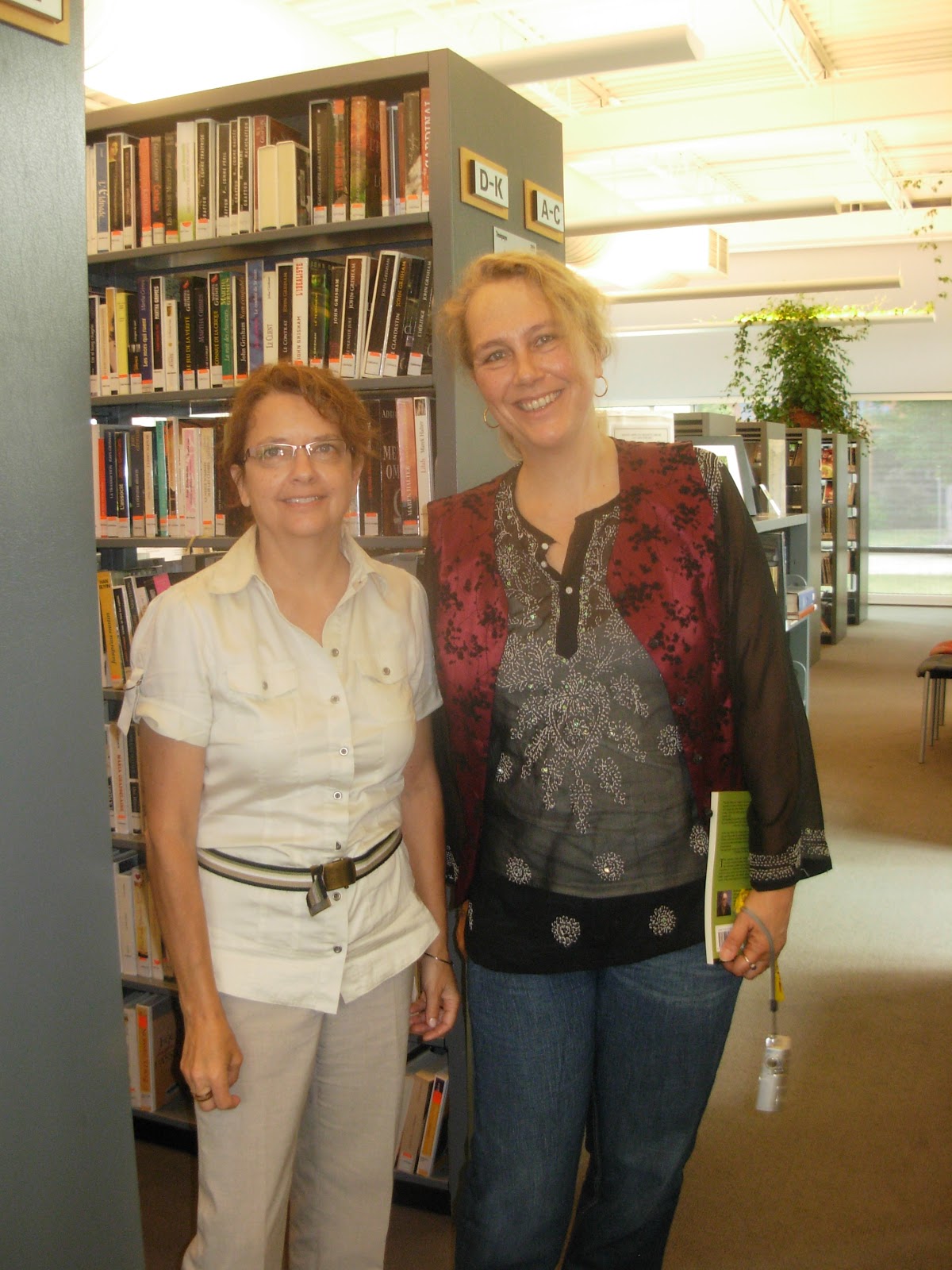
I began writing poems and stories when I was a very young child. I don't know if there is a why. I think some things are just constitutional, but I can say that I was always fortunate in school (elementary school, high school, college, and university), because I was blessed with teachers who encouraged me to think originally, and who encouraged me to write. I believe that if you have a positive experience with literature by having good teachers, you stand a much better chance of developing your reading and writing skills. I was really lucky, too, because both my parents encouraged me to be creative.

Reading books voraciously from early on in my childhood definitely inspired me to become a writer. At an early age, I requested tales of Greek, Norse, and Egyptian mythology, and I devoured all of Andrew Lang’s Fairy Books (a twelve-book series of collected fairytales). When I began creating my own stories and novels, I realised that, like C. S. Lewis, I wanted to write the kind of stories that I enjoyed reading.

What is your writing schedule?

I find that I do my best writing in the morning. I also frequently work in the evening until very late.

What projects are you working on now, or plan for the future?

I’ve begun research for the sequel to The Magic Manuscript: Book One - Voyage to Eve Ilion. I envision at least five books in the series. They are all sitting dormant in my imagination, waiting for the opportunity to manifest.

What kind of advice or tips to you have for someone who wants to write and get published?

The first tip I can offer is that you should be true to yourself. You should write because you love to write. The second point is that you should have patience. Sometimes, you need to put a project down and let it sit for months if not years. Books often correspond to our own inner evolution and have their own time frame. Having said that, if you are a writer, you should just keep writing, whether you feel inspired to write or not. You can't wait for inspiration to come.

I firmly believe every writer should be open and dedicated to the revision process. If you don't like editing, then change your view and interpret "revision" as "rewriting". It is not writing something over, it is writing something better. We need to temper our creative and sometimes self-indulgent imaginations within the structure of grammar, syntax, and the comments of an editor who prods us and makes us question every flaw in the book until any existing flaws are removed.

Finally, don't give up on your dream of being published. So many famous writers experienced rejection letters again and again before their works got published. When I was in my late teens and late twenties, I received a couple of encouraging letters from Madeleine L’Engle, in which she encouraged me to keep writing. I was touched that she answered a letter I wrote her when I was just nineteen. Years later, she also wrote me back when I asked her advice about writing my YA fantasy work (I actually began writing The Magic Manuscript in 1988, though it went through several titles and numerous versions and revisions). She encouraged me to keep writing poetry and stories. I still have her letters in one of my bookshelves. It helps to have people mentor you, but you must believe in yourself.

Are there any other comments, advice or tips that you would give to beginning writers?

Enjoy reading. Whenever I read good poetry, I find it echoes in my head and I begin composing a poem almost despite myself. Write for the love of writing. Anything that comes after that is a gift.

What do you do when you are not writing? 

I love walking in nature. I like travelling, watching movies, reading books, meditating, and I like being with people, as well as being alone. When I spend time in contemplation, I find that I get to the source of words. That is essential for someone who has many words and imaginative thoughts swirling in their head. Then, when I re-immerse myself in writing, I find that my creative capacity is clearer, reenergized, and the words flow by themselves.

Anything else you would like to add?

I'd like to especially thank you for creating this opportunity for writers.

You can learn more about Barbara and her work on the following sites:

Personal website: www.burgesswrite.com
Publisher's website: www.piraeusbooks.com
My blog about my latest book:  http://themagicmanuscript.blogspot.com/

My latest YA fantasy book The Magic Manuscript: Book One - Voyage to Eve Ilion is available as an e-book at

The book is available as a paperback at
www.amazon.ca (Canada)
www.piraeusbooks.com (My publisher’s website, in the USA)
http://www.bookdepository.co.uk (free worldwide shipping)
www.amazon.de (Germany)
www.amazon.fr (France)
www.barnesandnoble.com (North America)

I was recently interviewed by Renee Hand. Here is the link to the interview. You can download and save the entire show onto your computer: http://www.blogtalkradio.com/storiesfrom
unknownauthors/2011/12/14/interview-with-barbara-c-burgess-for-the-magic-manuscript

Tuesday, December 27, 2011

Exploring the Writing World of Betsy Riley

Author/artist Betsy Riley left her small hometown in Kentucky to spend over 35 years working at the leading edge of science and computing in Oak Ridge Tennessee. Now she continues this work as a Program Manager for the federal government. But it hasn't been all bits and bytes for Betsy. She has owned a ballroom dance studio, been a ham radio operator and traveling lecturer. Along the way she had four marriages and three divorces, and learned that being alone doesn't have to mean being lonely.
Tell us about the genre of your work. 
This particular book is an illustrated fable that is inspirational. It uses an extended metaphor to offer a message of hope to people who have gone through relationship troubles.
Why did you choose this genre?
I had originally written the piece for therapeutic reasons after my second divorce. Recently I came across it and shared it with some friends who had been through similar breakups. Their reactions encouraged me to make it more widely available.
What are some of your books, stories that have been published?
The Comet is my first fiction book to be published. Before this, I had published essays and poetry in high school publications such as The Beta Club Journal. Until now my publications have been non-fiction appearing in the proceedings of computer conferences or in business magazines like The Office.
Give a short description of each. 
The Comet, print version ISBN-13:978-0615475783, ISBN-10:0615475787, is available from Amazon.com and http://BlueDragonPress.com and my website http://brws.com
An epub version for the Nook Color is ISBN-10: 0983735603, ISBN-13: 978-0-9837356-0-1
How do you come up with the names of places and characters in your books?

Often I take names of friends that inspired certain character traits, and then modify them slightly. I mostly use real locations, real place names.  Of course, in The Comet, the characters don't really have names per se. There is the comet, the sun, the moon, etc.
How did you develop the character of your protagonist in this book?

Although the protagonist is a comet, she is based on every woman I know who has gone through a breakup, divorce, or bad marriage. Since I want all my work to have a positive message, I had to be sure that she developed strength during the course of the story.
What about an antagonist…is there a unique “bad guy” or a recurring nemesis of any
kind?

The "bad guys" are a planet, a sun, etc. I guess that could be considered unique (chuckling).
What’s your favorite thing about your book?
The positive message and t
he images. I had originally planned to illustrate it using pastels, but decided to mockup some placeholders digitally. I wanted a primitive, iconic look. I liked the first image I did using Photoshop's paint option so much, I decided to go all digital.
How is writing in the genre you write, different than other genre?
This particular book is heavily illustrated, and shorter than a novel. But I write in multiple genres (sometimes mixing prose and poetry in the same piece). The common thread in my work is the concept of "family of choice" and finding a way to show a positive message from negative experiences.
Why and when did you begin writing?
I've been writing ever since I was a child. I did my own neighborhood newspaper, complete with movie reviews, when I was 10. I never stopped writing. I wrote poems, stories, essays, and speeches. I'm hooked on writing, I can't stop. When I'm stressed, I write and it makes me feel better. When my husband had a cerebral hemorrhage while he was in another state,  and the earliest flight wasn't till the next day, writing a poem about it helped me stay calm.
What is your writing schedule?
I work full time, at a demanding job, so my writing is done on evenings and weekends.  I write while watching TV. I jot down ideas for later while sitting at stoplights, while shopping, while out to dinner.
What projects are you working on now, or plan for the future?
I like to keep several projects going at once, so I can switch when I get bogged down. I'm currently working on two poetry chapbooks (one illustrated), a fictionalized memoir/guidebook for step-parents,  a zombie novel (that does NOT involve an apocalypse), and a collection of twisted nursery rhymes and fairy tales, working title "The Grimmer Goose".
I have two poems coming out in the launch edition of Empirical Magazine (in January 2012) and two short stories in an anthology to be published by Lebrary later in the year.
What kind of advice or tips to you have for someone who wants to write and get published?
Don't just want to write, WRITE! With digital publishing and e-books, there are so many more avenues to publishing now than in the past. Like "you can't win if you don't play", you can't publish if you don't write.
Are there any other comments, advice or tips that you would give to beginning writers?
READ. Read magazines like Writer's Digest; read books on writing; read books in your chosen genre; read at least a sampling of books in other genres.  While I'll never write a western, if I ever have to write a fist fight scene, I'll be able to use what I learned by reading Louis L'Amour.
What do you do when you are not writing?
Besides editing, you mean? I read, or paint, or draw. I play solitaire or video games (I'm hooked on one of the AARP mah-jongg games). I go to craft shows and art exhibits.
What “Made It” moments have you experienced in life?
Getting married barefoot on the beach
at sundown on Maui.
Having a letter to the editor published at 12.
Being called out of study hall my senior year of high school to be handed a telegram from President Nixon, naming me a Presidential Scholar.
Getting a standing ovation for my winning speech at the Tennessee JayCees state convention (after I had to follow the state Poet Laureate on the program!)
Dancing the twist onstage with Chubby Checker (solo).
Being invited to West Berlin to give exactly the same speech I had given there the year before.
Successfully doing a dive to mid-air hover in Indoor Skydiving.
Seeing my first book selling on Amazon.
Having friends that I had given copies to, buying extra copies to give to their friends.
Winning first place in an online contest with my very first flash fiction short story.

Saturday, August 20, 2011

Like Paranormal Stories! Then You May Want to Get Aquainted with Jane Crammer and Her Book, Ancestors and Angels

I am a forty-something mother of three grown up children, married to Mark for twenty-five years, born and bred in Yorkshire, England.  I have a great interest in the paranormal and afterlife and love to spend my time researching anything weird and wonderful. I write for several ezines, The Spirit Seekers, WakaWomen, News2Views  and have written a guest article for Moonlight Paranormal which is published by a ghost-hunting team of paranormal investigators

When did you begin writing? 

From the age of three, I declared that when I "grew up" I would write books. "Writing" for me back then was actually a succession of stories told in rudimentary pictures of stick people with no arms - but I have found over time my style has improved somewhat! 

What tips would you offer beginning writers to help them? 

Write down whatever comes to mind, in any order, whenever the inspiration strikes you - it can all be re-organized later, just do not lose the creative thread. Invest in a dictaphone; they are invaluable for talking your way through awkward passages. Most importantly, believe in yourself, find your own unique voice and style, and you will get there in the end. 

Please share with us more about your latest book. 

My book "Ancestors & Angels" is a true story of my family across several generations and their numerous encounters with the paranormal.  It begins with my great-great grandmother who literally came back to life on the mortuary slab, several hours after physically being pronounced dead. She declared she had seen the other side, and been allowed back for two weeks only to "put her affairs in order.” It comes up to the present day and my own strange experiences, and subsequent search for answers. I have included pictures of family members who are in the book.  The first picture is of Auntie Mary, followed by Elsie and then a picture of Olive.

Who published your books? 


I set up an Independent Publishing Company as I decided life is too short to sit around sending off manuscripts endlessly to Traditional Publishers (not that I had tried). I wanted complete control over the book, how it looked, typeface etc. and I was fortunate in being related to some very talented people who helped me with the technical side of things. 

What audience is your book geared towards? 

Anyone with an interest in the afterlife, angels, spirits, ghosts, haunted houses, astral travel, the paranormal generally, or just an interesting tale of one family through several generations enduring numerous hardships and deprivations and pulling together as families do. It could be described as "Angela's Ashes" meets "The Twilight Zone.”
 

When it comes to social media do you prefer one platform over the others? 

I am on Twitter, Facebook and LinkedIn. I find Facebook the best medium to properly interact with people though, and have built up some good relationships there. I am still finding my way around Linked In, and Twitter is a bit impersonal, more of a numbers game. 

Where can people purchase your books? 

Ancestors & Angels is currently for sale on Amazon.co.uk, Amazon.com, through Waterstones, Barnes & Noble, The Book Depository and several other outlets. 

What else is in the works for 2011? 

I am currently working on two further books.  One is Seasons out of Time about Soul Mates, Kindred Spirits, Akashic Records, Life Maps and Karma. The other book is Specters in the Mist is more tales of the paranormal, but looking in greater depth at different phenomena.

Before we go, could you tell the readers just a little about your home in Yorkshire, England.  Once again where we can find your book, or more about you and how readers can contact you.

Yorkshire is a vast and varied region of more than three and a half million acres and a population of almost 5 million.  Most of Yorkshire's people live in the south and south west, in the old West Riding. Here we find many of the region's largest towns, most of which grew as a result of the historic textile trade. Most of Yorkshire's people live in the south and south west, in the old West Riding. Here we find many of the region's largest towns, most of which grew as a result of the historic textile trade.  It is the countryside, though, for which Yorkshire is best known. The beautiful Yorkshire Dales in the Carboniferous Pennines of the west attract visitors from across the land. They come to walk, to stroll, to browse in bookshops or relax with a pint of Yorkshire's finest ale. They come in search of waterfalls, ruined abbeys, captivating views and literary links.
On Facebook - Jane Cranmer, Author of Ancestors & Angels
On Twitter - @JLCGhostwriter

Saturday, July 9, 2011

A Conversation with Psychologist/Author, Warren Bull, about His Short Story Collection, Murder Manhattan Style


Warren Bull spent his childhood in Rock Island, Illinois, which is along the Mississippi river. Many years earlier, Abraham Lincoln tried a case in the city and argued for the rights of railroads to build bridges across the river.
Warren attended Knox College, where one of the Lincoln – Douglas debates took place, and the University of Illinois. His graduate training was at the University of North Carolina, Chapel Hill, and what is now Alliant University in Fresno, California.
He was first licensed as a psychologist in 1983. He has worked for agencies and in private practice. He has worked with people of all ages as a therapist and as an administrator. Warren is currently licensed in three states and has two national credentials.
Warren Bull is the award-winning author of more than thirty short stories as well as memoirs, essays and a novel, Abraham Lincoln for the Defense, published by PublishAmerica, 2003 and Smashwords, 2010.  His collection of short stories, Murder Manhattan Style, was published by Ninth Month Publishing, Co., in 2010.  In addition, he has published in the anthologies Strange Mysteries, 3, 2, and 1 Whortleberry Press; Medium of Murder, Red Coyote Press, 2008; Fish Tales: The Guppy Anthology Wildside Press, 2011; Great Mystery and Suspense Magazine; Mouth Full of Bullets, and The Back Alley, on Sniplits.com; Mysterical-E and Futures Mystery Anthology Magazine among others.  He is a psychologist in his “day job.” He comes from a functional family and is a fierce competitor at trivia games.


Tell us about the genre of your work.
Most of my work falls in mystery/suspense short story category. I also write “literary” short stories, essays, memoirs and mystery novels. My latest publication is a collection of mystery short stories set in Manhattan, Kansas or Manhattan, New York.
Why did you choose this genre?
Since 2003 I have had one novel published and between thirty and forty short stories published. As my wife is fond of saying, “Do the math.”  I have completed a Young Adult novel, and a second novel about Abraham Lincoln, which have generated enough interest among agents that I have been asked to send the entire manuscript a couple of times.  Each time I got a polite “No thanks” in response. From a publisher’s point of view, the investment in a novel is much greater than in one short story in a magazine or anthology. Part of the cost of publishing a novel is the cost of not publishing novels that were not selected.  The chances of getting a short story published are much greater than chances of getting a novel published.  If I had stuck to only writing novels, I would have only one publication. In addition, I really like short stories. Moreover, I really like getting published.
What are some of your books, stories that have been published?

Abraham Lincoln for the Defense was my first novel published.  It was based on an actual murder child trial that so intrigued Lincoln that he was still writing about it five years later. Resolution of the case solved one mystery, but it created a greater question that remains unanswered to this day. The novel introduces the reader to Lincoln while he is a young attorney developing into the man who will become the great emancipator.  Lincoln’s writings about the case were so essential to the novel that I regard him as my co-author. The print version is out or print, but it is available at http://www.smashwords.com/books/view/13700
Murder Manhattan Style, ISBN 13:987-0-9822271-3-8 is a collection of fifteen short stories recommended by Nancy Pickard, New York Times Bestselling author who said, “Warren Bull is a short story master, and this collection shows him at his best with quick stories told in crisp, clear prose. There’s variety, drama, history, humor, pathos, compassion and even Shakespeare here, along with surprising and satisfying endings to every story.” Earl Staggs, Derringer Award winning author said, “Murder Manhattan Style by master mystery writer Warren Bull is a collage of well-written stories as different as their settings, ranging form the Manhattan in Kansas to the town of the same name in New York. Wherever and whenever these well-drawn characters play out their stories, their more to savor than what they do and say.  Underlying each engaging tale is a glimpse of what is going on in their minds. It takes a practicing psychologist to relate that element so sharply.  Highly recommended. Available at http://www.ninthmonthpublishing.com/books.html
Sniplits short stories by Warren Bull are available at   http://www.sniplits.com/storiesforauthor.jsp?a=197

How do you come up with the names of places and characters in your books?


Actually, it was not until I looked over a number of published stories that I realized I had used the same locations and some of the same characters for several stories.  Manhattan, Kansas came from a short story contest at the Great Manhattan Mystery Conclave set in Manhattan. A requirement for the contest was to use the local setting. I became emotionally involved with a fictional family living in “Bleeding Kansas” before the Civil War.  The story I wrote was called "Beecher’s Bibles.”  

As for Manhattan, New York, one year the conclave celebrated a locally born author, Damon Runyon.  That set off a fun series of story ideas.  

My friend and mentor, Bob Iles, who is now deceased, wrote a series of stories about a detective in post-World War II Manhattan.  With his permission, I borrowed the world he created and wrote a story that began in his detective’s office.  It was great fun as well as a challenge to write, “The Wrong Man.”  As a story, it got more rejections and more editorial praise along with the rejections than anything else I have ever written.  It was first available online. Then it was accepted as an audio story on Sniplits. Now it is also in my short story collection.  It is my favorite story to read at signings and always gets a strong positive audience reaction.


What is your favorite thing about your book?
I like the opportunity to roam over time and space.  It is fun to create a tight but complete story arc in so many different setting and with so many different characters. Of course, sometimes I have the attention span of a puppy in a yard full of squirrels.
How is writing in the genre you write, different than other genre?
With a novel, every word counts and that is even more crucial with a short story.  I try to indicate character in as few words as possible by action and description.  For example in a story I’m working on now, I describe a character who talks about how terrible it is that her boss when murdered and then checks in the mirror to see that her mascara is still intact.
Why and when did you begin writing?
 I cannot remember not writing since I learned how to read.  My mother kept the spiral bound notebooks that I used to write stories in while I was in elementary school. When I was in my freshman year at college, I came home on break and was mortified to discover that she had shared everything I wrote to her with the neighbors.
What is your writing schedule?
 I write almost every day, pretty much any time of day when I have a moment free. Sometimes at night my writing brain (or muse) will wake me up or not let me sleep until I write some more. Nighttime is when the muse is most likely to want me to correct mistakes, improve the rough patches, or add necessary information.  Since I know the characters, I write about, I sometimes forget that I need to explain things to my readers.
What projects are you working on now, or plan for the future?
I am still shopping my novels and still writing short stories.  I plan to continue writing both. I took about none years to get my first novel published and I continue to write novel.  That clearly proves I do not have enough sense to know when to stop.
What kind of advice or tips to you have for someone who wants to write (especially mystery)?
Take the time to learn the craft.  Look for a good critique group or writing partner. Writing is a solitary activity and I have never met a successful writer who did not have at least one knowledgeable reader.  And, persist. Join Sisters in Crime and Mystery Writers of America.  And, persist some more. 
Are there any other comments, advice or tips that you would give to beginning writers?
As a recovering editor and writing contest judge, I strongly recommend you read and follow the directions for submissions, query letters, contests etc.  It will not guarantee publication but it will get you read.  That gives you a gigantic advantage over people who do not read and follow directions and therefore will never be read.
What do you do when you are not writing? 
I eat, sleep, do the laundry or wash dishes.  I worked as a clinical psychologist for more than twenty-five years.  After my second bone marrow transplant for multiple myeloma (bone marrow cancer), I retired.
What “Made It” moments have you experienced in life?
Winning awards is a sign of success. “Beecher’s Bibles” won an award.  “A Lady of Quality,” available on Sniplits, won an award for the best short story of the year in 2006 from the Missouri Writers’ Guild.  It was featured on Sniplits for Black History Month. Another story was voted best in the anthology it was published in by readers.  Getting published, and having more than one story accepted by a single publisher definitely makes my day.  I was pleased and flattered to get positive reviews from authors I respect.  Being recognized by readers and getting compliments from them is a wonderful feeling.  I am also well aware that one publication is no guarantee there will ever be another one.  Writing is like dancing on a knife’s edge.
Learn more about Warren Bull and read his blog.
He blogs on Fridays at:  http://writerswhokill.blogspot.com/.