
I’m a Canadian writer and freelance editor. In 1983, I received my Bachelor of Arts in English Literature from McGill University, Montreal, Canada. I was First Class Honours in English and “University Scholar.” At McGill, my Honours thesis was on the influence of the German romantics on the Scottish fantasy writer George MacDonald. In the MA English Literature program at McGill, I focused on medieval romance literature. My thesis advisor, Professor Paul Piehler, had been mentored and tutored by C. S. Lewis (British author of the Narnia books) in Oxford, England. (Piehler has contributed a chapter to the book C. S. Lewis Remembered: Collected Reflections of Students, Friends and Colleagues.) Recently, The Magic Manuscript: Book One – Voyage to Eve Ilion was reviewed by Paul Piehler. I was honoured that Professor Piehler wrote such an insightful review, and I was especially touched because when I was in university, his ideas about allegory and literature had a profound influence on my thought and writing.
In 2002, I worked briefly as the assistant to the Executive Director of the Federation of BC Writers in Vancouver, Canada. Over a period of five years, I taught English to international students at a private ESL school in Vancouver. Currently, I write and edit on a freelance basis. I am the deputy editor of Writing Edge Magazine, an Australia-based international magazine, to which I also contribute articles. I judge in writing competitions.
Tell us about the genre of your work.
C. S. Lewis's words: “I wrote the books I should have liked to read” deeply resonated with me. I decided to write the kind of YA (young adult) fantasy book that I would have enjoyed reading.

In The Magic Manuscript: Book One - Voyage to Eve Ilion, many magical transitions recur. The main characters, Jennifer and Arthur, are transported to other times and, indeed, other worlds. This book is intended for young adult and adult readers who appreciate YA fantasy literature. We’ve seen in the new millennium a notable spike in young readers’ interest in paranormal literature, for example, Stephenie Meyer’s vampire-romance Twilight series. But not all teens are grabbed by tales of vampires, werewolves, and ghosts; some young adult readers may well gravitate more towards the lighter shade of paranormal literature. The genre “paranormal” is very wide and may also include stories about fairies, angels, telepathy, superpowers, wizards, reincarnation, and time travel. Those were the aspects of fantasy literature that captivated my interest when I read YA books, and so I decided to incorporate them into my book. There are faeries, superpowers, wizards, reincarnation, and the whole plot centers on time travel.
Why did you choose this genre?
I grew up with the following books by George MacDonald: At the Back of the North Wind, Phantastes, The Princess and Curdie, and The Golden Key. I read and reread C. S. Lewis’s Narnian books, as well as his fiction for adults, such as his science fiction trilogy and the novel Till We Have Face (Lewis's retelling of the Greek myth of Cupid and Psyche.) The concept of entering another dimension via a seemingly mundane portal in this world fascinated me, and writers like C. S. Lewis and George MacDonald first opened that magical door for me. For instance, in The Lion, the Witch, and the Wardrobe, Lucy enters the world of Narnia after darting into the back of an old wooden wardrobe while playing hide and seek with her siblings. In Phantastes, the main character steps out of bed one morning and finds that he is standing, not on his floral-printed green carpet, but on a grassy "sward" or lawn; suddenly, he has entered Faerieland. C. S. Lewis wrote that after he began reading Phantastes, he was overwhelmed and knew he "had crossed a great frontier." I think that fantasy novels in particular offer the gift of entry into the imagination through which one can cross fantastic frontiers.
What are some of your books, stories that have been published?
The Magic Manuscript: Book One - Voyage to Eve Ilion was published by Piraeus Books in the USA in June 2011. Two novellas were published last year in Australia. The first was Suzanne and the Maharaja's Son, a story set mainly in India. The second was A Weekend on Monte Bianco, a story set entirely in Italy. I've written a number of article, including: "The Early British Adventurers in India," “Paranormal Romance for the Young Adult Market”, and “Cold Prevention”; I write a health column and sometimes judge in writing competitions.
What ages do you direct your books?

My young adult fantasy book is intended for an audience aged 12-18. There are many adults who like YA fantasy literature, so my latest book can certainly be enjoyed by readers from ages 11 to 100 and more! The two novellas and all of my articles have been written for adults, while I have a picture book {Minnah Kim’s Piano-Playing Pet Parrot) and a chapter book (A Cat Called Good Morning) which I hope to publish soon for younger children.
Give a description of each, and where they can be found.
It turns out that there are several authors by the name of Barbara Burgess, so I use the initial “C.” to distinguish me from them; hence, people can do an online search for me under “Barbara C. Burgess”.
The Magic Manuscript: Book One - Voyage to Eve Ilion by Barbara C. Burgess
ISBN-10: 0983185379
ISBN-13: 978-0983185376
is available as a paperback at the following websites:
http://www.amazon.com (USA)
http://www.amazon.ca (Canada)
http://www.piraeusbooks.com (My publisher’s website, in the USA)
http://www.chapters.indigo.ca (Canada)
http://www.bookdepository.co.uk (free worldwide shipping)
http://www.barnesandnoble.com (North America)
http://www.amazon.de (Germany)
http://www.amazon.fr (France)
http://www.amazon.jp (Japan)
The e-Book version of The Magic Manuscript: Book One - Voyage to Eve Ilion is available at http://www.amazon.com and at http://www.piraeusbooks.com
The book is available in various bookstores and libraries across North America, including:
Banyen Books & Sound (Vancouver)
Bonder Bookstores (Montreal)
Babar en Ville (Westmount)
La Maison Anglaise (Quebec City)
Do your books have a teaching objective? If so, what is it?
Sir Philip Sidney, a famous English poet, wrote about the importance of teaching by delight. I’ve always loved that phrase. I certainly hope that readers find truth and wisdom as they enjoy my YA fantasy book.
How do you come up with the names of places and characters in your books?
It depends, of course, on the book. In a picture book I wrote, titled Minnah Kim's Piano-Playing Pet Parrot, the main character, Minnah Kim, is enrolled in grade two in North America. She has just arrived from Korea. I chose the main character's name because it is quite common in Korea and I wanted to lend authenticity to my story. In my YA fantasy The Magic Manuscript: Book One - Voyage to Eve Ilion, the story spins off the Arthurian legend; thus, the names Arthur and Jennifer echo King Arthur and Queen Guinivere.
How did you develop the character/s of your in each of your books?
This YA fantasy story is set in three different times with four main characters that appear in each time period; thus, when I was writing the book, I had to use a chart to keep track of the main characters' respective physical and psychological characteristics, as well as the modifications of their names. In terms of places, well, I visited Mawgan Porth, a lovely spot in Cornwall, England, when I was twenty-one; however, none of the names, characters, or events described in the books were based on real people or places; it's pure fiction! I did, however, consult with a British history teacher to verify certain geographical and historical points that I wove into my descriptions.
What is your favourite thing about your most recent book?
I'm always delighted by the thrill of suspense when you reach the end of each chapter. This leaves you intrigued and eager to read on to see what happens next. There’s a real element of surprise and suspense in the time travel sequences in the book.
Is your book illustrated? If so, would you tell us by whom, and if you worked with an illustrator, can you discuss that experience?
The book cover was done by a wonderful illustrator, Keith Bona. The publisher at Piraeus Books chose to use Keith, and I am delighted with the result.
Why and when did you begin writing?
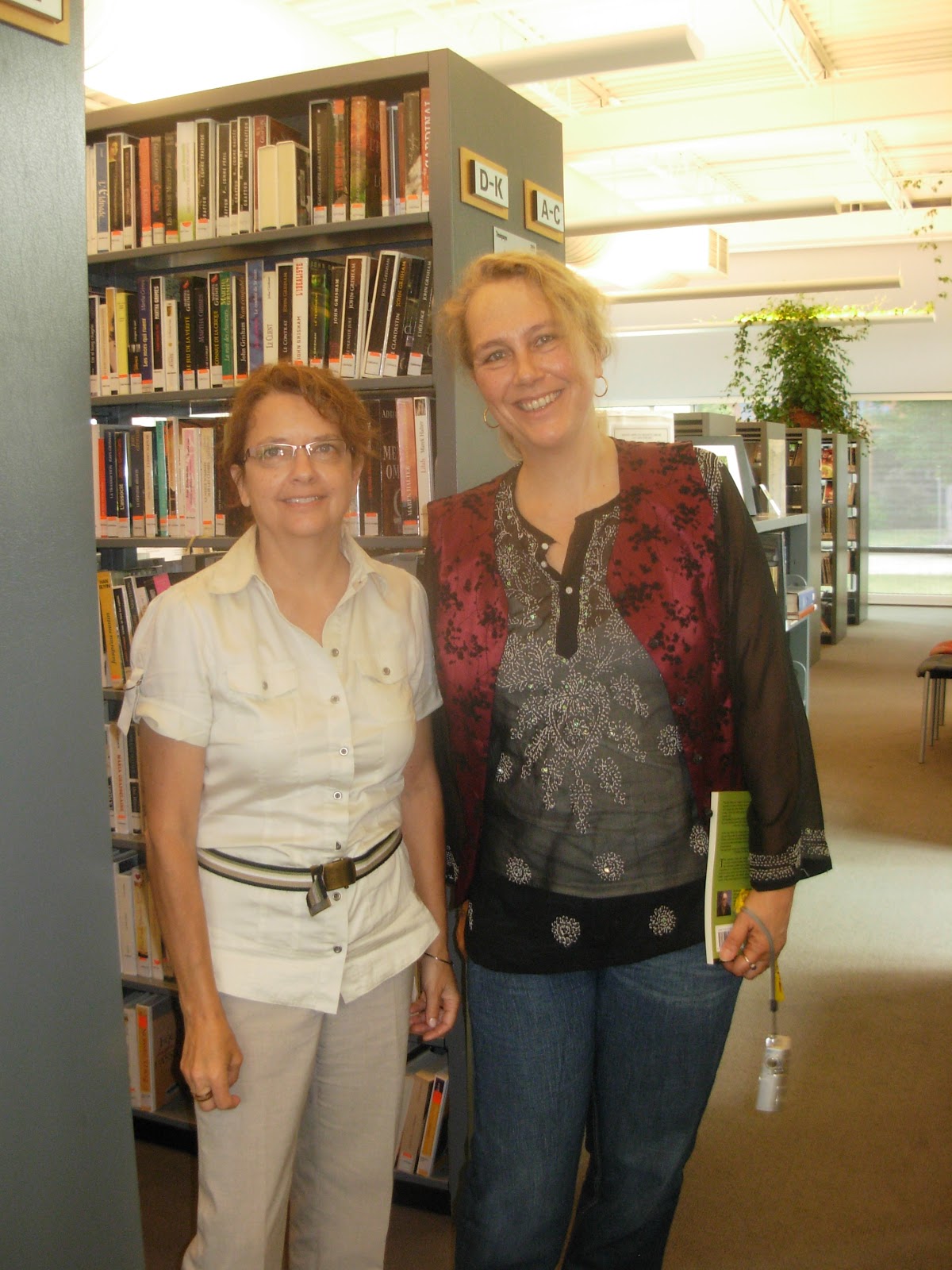
I began writing poems and stories when I was a very young child. I don't know if there is a why. I think some things are just constitutional, but I can say that I was always fortunate in school (elementary school, high school, college, and university), because I was blessed with teachers who encouraged me to think originally, and who encouraged me to write. I believe that if you have a positive experience with literature by having good teachers, you stand a much better chance of developing your reading and writing skills. I was really lucky, too, because both my parents encouraged me to be creative.
Reading books voraciously from early on in my childhood definitely inspired me to become a writer. At an early age, I requested tales of Greek, Norse, and Egyptian mythology, and I devoured all of Andrew Lang’s Fairy Books (a twelve-book series of collected fairytales). When I began creating my own stories and novels, I realised that, like C. S. Lewis, I wanted to write the kind of stories that I enjoyed reading.
What is your writing schedule?
I find that I do my best writing in the morning. I also frequently work in the evening until very late.
What projects are you working on now, or plan for the future?
I’ve begun research for the sequel to The Magic Manuscript: Book One - Voyage to Eve Ilion. I envision at least five books in the series. They are all sitting dormant in my imagination, waiting for the opportunity to manifest.
What kind of advice or tips to you have for someone who wants to write and get published?

The first tip I can offer is that you should be true to yourself. You should write because you love to write. The second point is that you should have patience. Sometimes, you need to put a project down and let it sit for months if not years. Books often correspond to our own inner evolution and have their own time frame. Having said that, if you are a writer, you should just keep writing, whether you feel inspired to write or not. You can't wait for inspiration to come.
I firmly believe every writer should be open and dedicated to the revision process. If you don't like editing, then change your view and interpret "revision" as "rewriting". It is not writing something over, it is writing something better. We need to temper our creative and sometimes self-indulgent imaginations within the structure of grammar, syntax, and the comments of an editor who prods us and makes us question every flaw in the book until any existing flaws are removed.
Finally, don't give up on your dream of being published. So many famous writers experienced rejection letters again and again before their works got published. When I was in my late teens and late twenties, I received a couple of encouraging letters from Madeleine L’Engle, in which she encouraged me to keep writing. I was touched that she answered a letter I wrote her when I was just nineteen. Years later, she also wrote me back when I asked her advice about writing my YA fantasy work (I actually began writing The Magic Manuscript in 1988, though it went through several titles and numerous versions and revisions). She encouraged me to keep writing poetry and stories. I still have her letters in one of my bookshelves. It helps to have people mentor you, but you must believe in yourself.
Are there any other comments, advice or tips that you would give to beginning writers?
Enjoy reading. Whenever I read good poetry, I find it echoes in my head and I begin composing a poem almost despite myself. Write for the love of writing. Anything that comes after that is a gift.
What do you do when you are not writing?
I love walking in nature. I like travelling, watching movies, reading books, meditating, and I like being with people, as well as being alone. When I spend time in contemplation, I find that I get to the source of words. That is essential for someone who has many words and imaginative thoughts swirling in their head. Then, when I re-immerse myself in writing, I find that my creative capacity is clearer, reenergized, and the words flow by themselves.
Anything else you would like to add?
I'd like to especially thank you for creating this opportunity for writers.
You can learn more about Barbara and her work on the following sites:
Personal website: www.burgesswrite.com
Publisher's website: www.piraeusbooks.com
My blog about my latest book: http://themagicmanuscript.blogspot.com/
My latest YA fantasy book The Magic Manuscript: Book One - Voyage to Eve Ilion is available as an e-book at
The book is available as a paperback at
www.amazon.com (USA)
www.amazon.ca (Canada)
www.piraeusbooks.com (My publisher’s website, in the USA)
www.chapters.indigo.ca (Canada)
http://www.bookdepository.co.uk (free worldwide shipping)
www.amazon.de (Germany)
www.amazon.fr (France)
www.amazon.jp (Japan)
www.barnesandnoble.com (North America)
I was recently interviewed by Renee Hand. Here is the link to the interview. You can download and save the entire show onto your computer: http://www.blogtalkradio.com/storiesfrom
unknownauthors/2011/12/14/interview-with-barbara-c-burgess-for-the-magic-manuscript
unknownauthors/2011/12/14/interview-with-barbara-c-burgess-for-the-magic-manuscript


