Total Pageviews

Showing posts with label mystery. Show all posts

Saturday, June 9, 2012

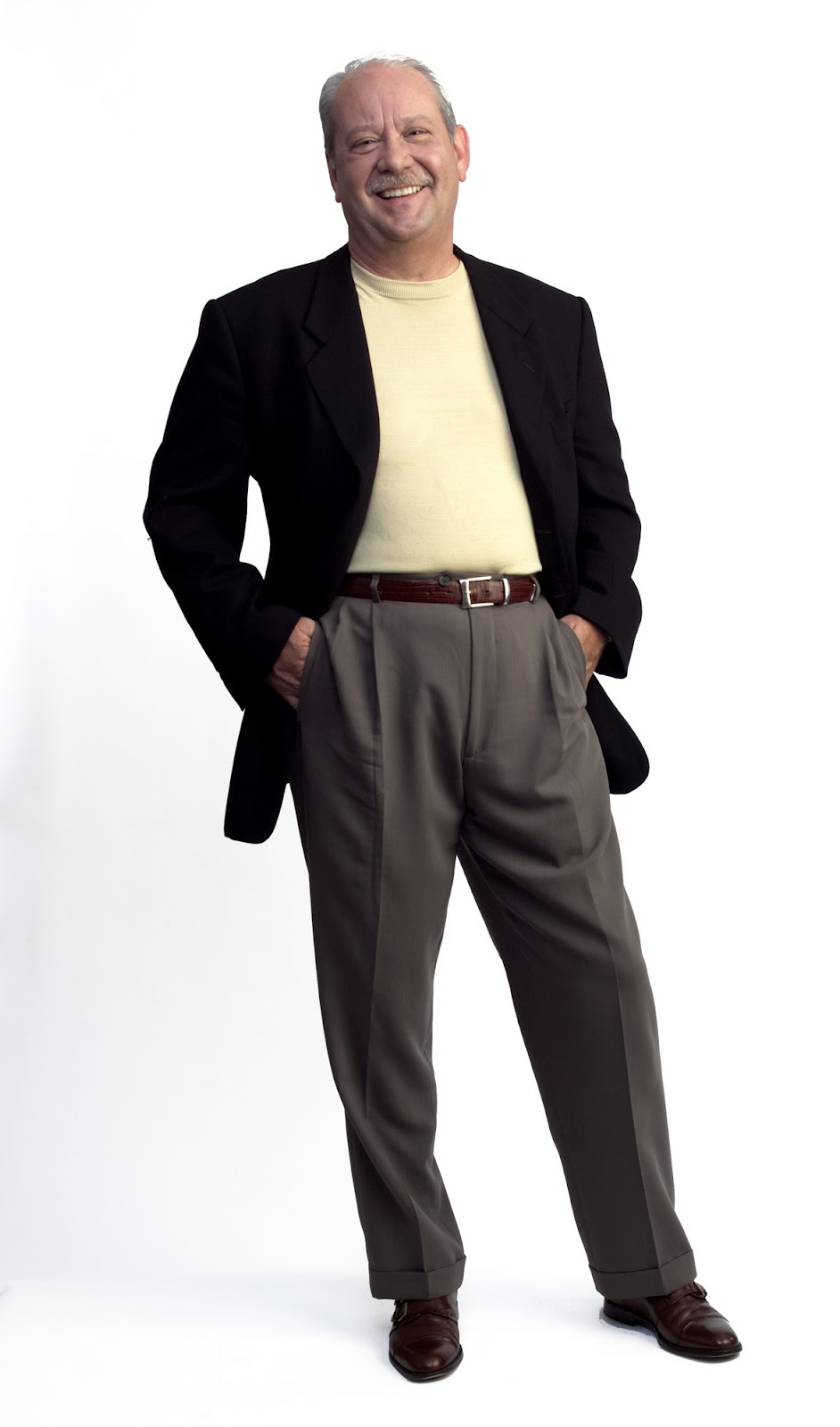
Texas Author, Jon Bridgewater, Writes Mysteries and Shares What is Going to be Released This Year


Originally from the Midwest I have lived in Houston the past thirty some years.  Started my career in sales and worked my way to Vice President of Sales and Marketing for a domestic manufacturer of electrical protection equipment.  I have always had a love for entertaining and the telling of a good story and when a friend suggested I write a book I considered his idea ludicrous.  The more I thought about it I decided to give it a try and after many a rewrite I finally felt I had a story people would enjoy reading and I hope you do.

Tell us about the genre of your work.

 I found if I wrote what I read I was in my comfort zone.  I love books, movies and television shows that keep you guessing who done it until the very end.  I hate when I can discover the killer and their plot half way through anything.   I also write westerns, I love the adventure of the old west.  Man pitted against man, (red and white) good versus evil, man against nature.  I write so the characters come to life, they have depth and even similar shortcoming to us all.

Why did you choose this genre?

 Mysteries hopefully to keep the reader interested and guessing until the end, then they can look back and see the clues I left behind for them to find.  Westerns just out of a love for the west and western lore.  All of my stories are based on truths or the truth about what could happen.  Mysteries and westerns alike deal with men and women any of my readers may know in a setting that either exist today or did exist in the past.

What are some of your books, stories that have been published?

Charity Kills” is my first published book.  It is available on Amazon.com and local independent book retailers.  ISBN:  9780984914203. For more info, go to www.jonbridgewater.com

Charity” as it has become known, is about a burned out homicide detective who was hand-picked to make the murder of a young woman simply slip off into the waste land of unsolved crimes.  Plagued by the memory of the unsolved murder of his wife some years earlier Detective Storm pursues this new girl’s killer as a hungry dog might go after a bone.   With the help of unlikely group of allies his determination spurs him on.

After The Storm” due out in the fall of 2012 is a story about the effects of the underworld element that migrated to Houston after Katrina.  Crime skyrocketed as citizens desperately sought help from their local police to curb the onslaught of home invasions, murder and drug distribution.  When the Medical Examiner’s little brother is killed Detective David Storm and his band of investigators find themselves in a corrupt world much bigger than anything they had experienced before.

The third and final installment of the David Storm Mysteries has yet to receive a name.  It is culmination of the series that lead Detective Storm to answers he has been looking for in the previous books.  Who had his wife killed and why.  To do this he becomes involved in the largest operation in the south to stop Cartel smuggling of illegal drugs into the United States.

Demons of Revenge” is so my only attempt at writing a western.  It is due out sometime in 2012.  The book set in pre-civil way Texas follows the adventures of a young man of privilege who comes to Texas to live the adventure he had so far only read about in dime story novels.  It is set against real places and a time where your intuitions had to keep you alive.  Jammed packed with a variety of characters the story leads you through a turbulent time in Texas History.

How do you come up with the names of places and characters in your books?

The places are real and if you read the book you could find any of them.  The names of many have been altered as not to offend the real people who live and work there.  Years ago I read a series of book written by David Lindsey and loved how he wrote about Houston.  When I began to write I felt many readers would like to experience the same thing I did.  Fittingly make Houston a Character in the book and know exactly where the action was fictionally taking place.  The characters are a Heinz 57 of people I know, none of the names are real and although those who have read “Charity” have tried to guess who I fashioned my characters after and in each case have always been wrong.  But as a writer is fun the hear their suspicions.

How did you develop the character of your protagonist in this book?

If my ego allowed I would love to claim he is me, but that would so wrong.  I had to have a hero with flaws.  He general back story is one created completely out of my imagination, but the character possesses many of the traits I find admirable.  The story is as much about his personal redemption as it is about solving the murder of a young woman.

What about an antagonist…is there a unique “bad guy” or a recurring nemesis of any kind?

There is a antagonist, a very cunning smart killer who takes advantage of all situations.  In following books there will be other bad guys but never the same one.  It appears I like to kill them off.  The small group of friends who have read “Charity” and my other stories have mentioned that I have picked out a similar type of person as my “Bad Guy” and I had not really noticed.  When I reexamined my work I found they may be right but the “bad guys” fit the stories.
What’s your favorite thing about your book?
 The redemption of my protagonist, how by solving a case no one wants solved he saves himself.
How is writing in the genre you write, different than other genre?
 Mysteries require to you to think far ahead.  To work on the twist and turns of the story to keep your reader involved with characters.  Mysteries need to keep the reader guessing until the end but also needs to contain clues throughout the story so when the reader does discover the “bad guy” they say to themselves “Damn” I should have seen that coming, the writer gave me the clues to solve this,

Why and when did you begin writing?
A few years ago after being pushed by friends who thought I would be good at it.  I found it hard, very hard at first but no love it and the stories play in my head like I am watching a movie of it.
What is your writing schedule?
I write almost everyday.  Some days everything works and it all falls in place.  Other days nothing works and when that happens I need to walk away get some distance and come back looking at things with fresh eyes.  It usually this off time my brain finds the twist or place I want to go and bam I am back on track.

What projects are you working on now, or plan for the future?

I have just finished writing the first draft of the third of the David Storm trilogy so now I go back to work polishing it.  I have a second western running around in my head and the true story of my Grandfather’s life pushing to be told next, but I think the western will prevail.
What kind of advice or tips to you have for someone who wants to write and get published?
When you have an idea for a good story write it down, save it.  When you have a flash of a great twist in your work, record it or again write it down.  I have even called from my car back home to my answering machine and left myself a message of an idea I don’t want to lose.  The brilliant flash you have just before you go to sleep may not be there in the morning so jet up write it down or record it.  The next morning you may read it or listen to it and it may be crap but you saved it, it may be the lynch pin you were looking for.  Publishing is another matter all together and would take more time and space then I have to give it right now, but suffice it to say seek help when get ready for that.  There are some very wise people who have already gone through it and can save you a lot of time.
Are there any other comments, advice or tips that you would give to beginning writers?

Don’t give up if you really want to write, write.  Have your friends read what you write all criticism is helpful, you may not agree but listen.  Biggest thing I can tell a beginning writer is to develop your character.  Give them death for God’s sake make them more than two dimensional.
What do you do when you are not writing? 
I volunteer with one of the largest charities in the country and work with special needs children and adults.  I love to fish and ride my Harley.
What “Made It” moments have you experienced in life?
 Not sure I would call it a “Made It” moment but more of an “Aha” moment.  A few years ago I was helping with horse show where the riders were specials needs people and use riding as therapy.  I met a young girl who has become very important to me.  One day while standing in the arena with her while she won another magnificent belt buckle for her effort, I asked if since she now had so many, she had five over three years, I asked her to let me wear one.  Her reply was direct and very clear as she told me “You got to earn it”.  When I finally grasp what she had just told me I had to do something to earn things, they were not just going to come to me because I wanted them.  After that I worked harder and now my work is beginning to garner some attention. 


Note from Sylvia: You can visit my other blog at: http://love-faith-and-guts.blogspot.com/that features a preview to my new book, Traveling a Rocky Road with Love, Faith and Guts.

Tuesday, May 15, 2012

History Buff and Mystery Writer, Coralie Hughes Jensen, Tells us About Her Latest Book, Winter Harvest

I have been fascinated since childhood by different cultures when my parents explored their forebears as religious pioneers in the Pacific Northwest and Alaska. I saw firsthand how spiritual beliefs have affected these cultures.

Often traveling to far corners of the earth, I now research my stories by living with the residents and visiting their churches. While I did not have to drive far for Winter Harvest, I did have to travel back in time. The author of three other books about life and spirituality, I finally write about something closer to home.

A native of California, I have lived in Oregon, New Mexico, Texas, and the Netherlands. I now live with my husband, and golden retriever in Massachusetts.

Tell us about the genre of your work.

 My latest book, Winter Harvest, is a historical with romantic and suspense elements. It is set in a Shaker Village in the 1830s in western Massachusetts. In the late 1700s, Mother Ann Lee opened several communes to house followers of her religion, the “United Society of Believers in Christ’s Second Appearing.” The religious community is noted for dancing as a form of worship and celibacy. Hoping to keep the community going, they brought in children indentured to them, offering an education in return for work in the fields and eventual membership.

Why did you choose this genre?

I am a history buff. Growing up, I read many books, dreaming about what it was like to live in another time. Yes, the historical novel cannot be written quickly. Even though I think I already know about the setting or the history, I still have to do more research than I intend. I have to find out how people dress, eat, live, and worship. What I can look up on the Internet has to be verified by at least three sites or a book.

What are some of your books, stories that have been published?

 Besides Winter Harvest, I have three other published books. L’Oro Verde is a mystery with a nun detective living in Tuscan village. Lety’s Gift is a novel about a woman with a paranormal gift that becomes the first female Anglican bishop of western Newfoundland. My first book, Passup Point, is a quirky novel about a small town in Labrador. I have three short stories in an anthology, and some of my short stories are published in magazines.

Coralie, tell us more about your books and where we can find them.

Winter Harvest 978-1-59414-889-7 is available on Amazon and barnesandnoble.com. The ebook version is coming soon. Intending to return for her, the Hammonds indenture their young daughter, Lucy, to the Shakers, a religious group of celibate families living at Hancock in western Massachusetts, when a recession forces them to move west. The girl finds a loving new family among the members, but disturbing events lead to mayhem within the quiet and thoughtful sect.

L’Oro Verde 978-0-9787318-7-8 originally under the pen name L. E. Chamberlain, it is available on Amazon and barnesandnoble.com. It is now published under Coralie Hughes Jensen on Kindle and Nook. When Bernardo’s body is found inside the church in her village in Tuscany, Sister Angela investigates, trying to understand the victim’s relationship to the powerful families involved in the production of l’oro verde, the region’s famous olive oil; its green gold.

Lety’s Gift ISBN# 978-0-9787318-0-9 is available on Amazon and barnesandnoble.com and on Kindle and Nook. Born with a gift, Sophie Hawkins is about to be consecrated the first woman Anglican bishop in Newfoundland’s Eastern Diocese and stops to relate her story to university students. She was born illegitimate in a poor fishing village in the 50s. After her mother’s death, the young child was left to be raised by a cruel grandmother, a sexually abusive minister, and the sadistic overseers of a prison-like orphanage, leading her to a breakdown.

Passup Point ISBN# 978-0-9787318-1-6 originally under the alias is available on barnsandnoble.com and is coming soon to Kindle and Nook. Jonah Devlin arrives in an isolated fishing village in Labrador to serve as pastor of an abandoned community church. He meets Gabrielle Pye, a young waitress struggling to raise her two younger brothers in the depressed economy of maritime Canada.

How do you come up with the names of places and characters in your books?

 I do lots of research. If part of the novel doesn’t involve real names and places, I hunt for location names on maps and make up similar ones. For people, I look up lists of censuses or cemetery records for the location and time the book takes place. 

How did you develop the character of your protagonist in this book?
 I love to give my protagonist a personality. For my female protagonists, I usually make them observant first and develop them by making them stronger and able to face terrible obstacles. The possible love interests for my protagonists are strong but intelligent and caring men. I have one manuscript for a mystery that is in the male protagonist’s point of view. He is a rogue and doesn’t deserve the interest of women with whom he connects, but women fall for him because he’s sympathetic and a brilliant detective.What about an antagonist…is there a unique “bad guy” or a recurring nemesis of any kind?

I do have antagonists. In Winter Harvest, the antagonist is the one who causes a death inside the community. In my worlds, most antagonists cannot help what they do. Most have been hurt somehow. Characters in my books are complex. It makes it more difficult for the protagonist to want revenge.

What’s your favorite thing about your book?
 In Winter Harvest, it is Lucy’s decision whether or not to pledge to the community when she turns eighteen. Forces pull her in both directions. She is grateful to the community that raised her but discovers advantages to living among the outsiders too.

How is writing in the genre you write, different than other genre?

 Few of us understand different cultures that existed before we did. If people do know enough to write about others 60 or more years earlier, they probably studied them for years. Historicals require research. Writers of this genre have to love reading nonfiction books detailing life and events from the past. The authors have to be detectives that want to check out every fact about the time, including food, clothing, lovemaking, childrearing, etc. before the manuscript goes out the door because skipping over the details makes the historical novel much less interesting to the historical reader.

Why and when did you begin writing?

 I wrote stories and poetry all through elementary and high school but had little encouragement to continue until after I worked and lived in the Netherlands. On my return I began my first novel. It was never published, but I kept writing. I am on my tenth novel so far.

What is your writing schedule?

 For at least an hour, I try to write, either fiction or nonfiction—I do freelance—every morning. Much of the day is spent planning what I am going to write the next day and reading novels and research books. I cannot emphasize how reading nonfiction—including news stories—gives me ideas for future novels. Reading other novels gives me format ideas, including creative ways to use POV, jumps in time, and how these tools affect the story.

What projects are you working on now, or plan for the future?

I am currently trying to sell two manuscripts, one a historical set in Tudor England and another, a mystery, set in New Zealand. I stayed in New Zealand a few years ago to do research for the mystery and went to England to interview Anglicans for the historical. I have also started a new novel. It has a contemporary setting with flashbacks to WWII France. I hope to make it back to France again soon but have visited the places I am including in my books several times already.

What kind of advice or tips do you have for someone who wants to write and get published?

Get into a local writing group. I go to Sisters in Crime meetings. I also started attending the New England and Rhode Island Romance Writers groups a few years ago and am currently on the board of the New England RWA. They give workshops full of writing tips—even if you are not a romance writer—and opportunities to meet agents and editors. I am also 2012 chairman of the agents and editors for their annual conference.

Are there any other comments, advice or tips that you would give to beginning writers?

Read about your genre and know your grammar. If you want an agent or editor to even look at your manuscript, you have to present it with as few errors as possible. While proofreading seems difficult and a long process at first, you can actually train your brain so that it gets faster and easier editing later manuscripts.

What do you do when you are not writing? 

I walk my dog. I administer communion to shut-ins, and take art classes.

What “Made It” moments have you experienced in life?

Anytime I get published, I feel I have made it.


Note from Sylvia: You can visit my other blog at: http://love-faith-and-guts.blogspot.com/that features a preview to my new book, Traveling a Rocky Road with Love, Faith and Guts.

Wednesday, May 9, 2012

Behind the Scenes with, John Brooke, the Creator of the Inspector Aliette Novelle Series

John Brooke lives in Montreal. He is the creator of the Inspector Aliette Nouvelle series of literary mysteries set in France. The most recent is Stifling Folds of Love. Brooke has won Canada's Journey Prize for his short story "The Finer Points of Apples", and he won a CBC-Quebec short fiction prize for The Death of PJ Barfard.

Tell us about the genre of your work. 

My primary focus these days is a series literary mysteries featuring a French policewoman called Inspector Aliette Nouvelle. I’ve just published the third, Stifling Folds of Love. I am working on the fourth. I’m not sure where the term ‘literary mystery’ comes from. A writer? Or a book marketer? I suppose it’s meant to separate the ‘thriller’, which is mainly powered by plot and action, from an approach that moves at a more measured pace and allows for a more psychologically complex cast of characters. When you think about it, the Sherlock Holmes stories were literary mysteries; the ‘thriller’ came later, but the term took over a corner of the bookstore nonetheless. I get worried when someone pegs my books as thrillers.

Why did you choose this genre?

I chose this genre because the first story I ever attempted was a police story. I was working in the film business in Montreal. Writing mystery novels had never occurred. I happened to notice a brief item in one of the French language dailies - a wire service story from France: Jacques Mesrine, Public Enemy Number One, had been tracked down and arrested north of Paris. The cop leading the operation was a woman. What struck me were two things. One: that France would have such a figure as a Public Enemy Number One. This was the mid-80’s. I thought Public Enemies had disappeared into 40’s film lore. I wondered what kind of man filled this anachronistic role in modern France. And two: that it was a female cop who’d caught him. I was fascinated by the idea of an emerging feminine hero tracking down an outmoded ‘macho’ hero, and taking the hero mantle for herself. Being a former Lit major, I had to notice the mythic subtext framing that brief news story and it inspired me to write. The context was police and crime. So without really knowing it, I began to write a literary mystery: The Voice of Aliette Nouvelle.

What are some of your books, stories that have been published?

I have published four books of fiction and a few short stories. I have been fortunate to win prizes for my two of my short stories. My books are:

The Voice of Aliette Nouvelle (ISBN 0-92183365-2) Aliette tracks a former Public Enemy Number One - who ought to be long gone, but can’t quite disappear into history. Mutual attraction is a mutual mystery.

All Pure Souls (ISBN 0-921833-80-6) Inspector Nouvelle uncovers a Goddess cult behind the murder of an up-market Marilyn Monroe ‘lookalike’ prostitute

Stifling Folds of Love (ISBN 978-1-897109-57-1) Celebrity gossip clouds the inspector’s love life – but the city’s ‘most eligible’ lovers are dying and it’s her job to find out why.

Last Days of Montreal (ISBN 0-921833-91-1) This a departure from the Aliette Nouvelle project. The book, based loosely on my own experiences and feelings, is about life in a small Montreal neighborhood during the politically difficult times surrounding the 1998 Quebec Referendum on Sovereignty.

All my books are published by Signature Editions, based in Winnipeg. They can purchased online in both paper and eBook format… The latest is Stifling Folds of Love, which makes the Aliette series a trilogy.

My website provides links to purchase and/or to find out more. http://www.aliette.ca


How do you come up with the names of places and characters in your books?  

The genesis of a French inspector’s name: Aliette - Borrowed from a little girl who causes trouble in a Luis Buñuel film, Le Fantôme de la Liberté. (The Ghost of Freedom.) Nouvelle - New, in the feminine. I’ve been told it’s not a real French name – you wouldn’t find any Nouvelles in a French phonebook. I’ve never looked. (There are none in the Montreal directory.) But I’m not writing reality, I’m writing a story. I situated her in a border city on the Rhine, where France shares space with Germany and Switzerland. I liked the idea of her being on the edge of literal boundaries, and crossing metaphorical boundaries as she goes about her investigations. The city is never named.

For the rest of the characters in the series, I have no method in selecting names. I try to have fun finding French names that sound good to me. They may be a little corny. They may carry a bit of symbolic weight - like Aliette does. I hope not it’s too obvious. The best names will make me laugh – my own private French joke derived from the French side of my life. Claude Néon. J-P Blismes, Tommi Bonneau, Pearl Serein, Flossie Orain, Hermenegilde Dupras, Ondine and Georgette Duguay…

In Last Days of Montreal, ‘Last Days’ is the only known name of the central character. The sign on the back of his electric wheelchair is both a warning and a prophecy to a city in danger of losing its unique identity to the crass demands of politics – and the people who know him simply call him ‘Last Days.’ It seemed a perfect name for a beer-soaked Don Quixote type travelling through a damaged world.

How did you develop the character of your protagonist in your books?

You develop any character by putting them into a situation that requires both action and self-reflection – the self-knowledge gained as situation unfolds is deeper ‘character’. Writing a detective series provides endless opportunity to explore trenchant aspects of a central character and those surrounding her. I’ve tried to build the Aliette Nouvelle stories around underlying themes. As I mentioned, the theme behind the plot in the first book is the hero’s identity – how a ‘new’ Aliette wrests the hero mantle from a tired, obsolete man. In the second book it’s Aliette’s spiritual relationship to the world she lives in: the context is a murder within a goddess cult; our hero’s sense of what she ‘believes’ is tested as she solves the crime. In the third book, murders occur within the context of celebrity gossip and spectacularly public love. Aliette works through it while trying to protect the naturally private area of her own heart that wants to keep love quiet… So in all three books you have a hero who faces challenges to essential parts of her character. We hope she comes out ahead.

What about an antagonist…is there a unique “bad guy” or a recurring nemesis of any kind?

In the Inspector Aliette Nouvelle series the ‘bad guys’ change from one story to the next. In each, they represent the force that challenges a part of Aliette’s character and the values defining it. The recurring elements in the series are the people she works with. By design, they are mostly men. Not necessarily ‘bad’ men, but men whose point of view will usually differ from Aliette’s. In that sense, you could say a ‘man’s world – or the ‘male perspective’ - is the recurring nemesis this female investigator comes up against time and again. Which I hope gives Aliette a certain contemporary universality.

What’s your favorite thing about your books?

If you are asking what is my favorite thing about my books as finished products, that’s a hard question because I don’t read them as a consumer of crime fiction. What’s more, readers I meet often express a completely different sense of what I’ve written from what I intended. (One good reason why a writer – or any artist – should just work to please him/herself.) But to answer your question, I will say my favorite thing is a playful quality, something that makes my mystery books a bit more like a ‘tale’ and a little less like a slice of life from the literal world. Even when the context is tragic, or sometimes violent, that is what I aim for. It’s not ‘absurd’ – Aliette is a serious woman. It’s just not ‘hard nosed’… Whimsy? A cartoonish tinge? It’s difficult to define categorically. Whether I succeed or not, only a reader can tell.

As for the writing process, my favorite thing is the enjoyment of finishing. There is so much uncertainty in the first stages of writing a book - first in finding the story line, and then in making it work. It can get very uncomfortable in terms of confidence and even interest. (How many times have I heard someone say they abandoned a writing project because they grew ‘bored’ with it?) It can last a year, or longer. That’s a test of will and patience, and ultimately imagination - a long slow battle with the Muse. When I come out the other end feeling I’ve got something solid, the finishing stage is something to be enjoyed. A book may be three hundred pages long, but it can still be just as elegant and precise in design and detail as a sonnet. And the rhythm can feel like a song. Many readers will never even notice. But creating that final level of quality is highly pleasurable. Something definitely worth working for.

How is writing in the genre you write, different than other genre?

The main difference between writing a police series and ‘one-off’ novels or short stories is the continuity – the world you begin to create. This both makes you want to go further and helps you go further, because one story always opens a door to a possible next, and the familiarity with the territory and main character makes starting the next slightly less daunting. Although you can certainly do this with novels and short stories. Faulkner’s novels unfolding in Yoknapatawpha County. Runyon’s stories set in the Prohibition era New York City underworld. My book Last Days of Montreal is not quite a novel; strictly speaking, it is a collection of ‘linked stories’ featuring recurring characters, albeit in different roles – sometimes central, other times peripheral. And all those stories are set within the same well-established cityscape.

Why and when did you begin writing?

I began writing in my forties. I am sixty now. I have always worked on the so-called creative side. I was in the film business, working as an editor, also producing some short films of my own. When I tumbled across the idea for the first Inspector Aliette Nouvelle story, my first attempt at that was in fact a film script. I could not sell the finished script, but I still liked the story so I began to transpose it into a book. I’m not sure I like the word ‘novelize’ but I suppose that’s what I was attempting. In any case, I had the story already there in front of me (which helped!) – the goal was to make it deeper, more psychological, and to turn images (film scenes) into viable prose. I also began writing short stories about the life here in Montreal during the politically crazy years of the Referendum. No one taught me - no Creative Writing course. It’s interesting how, when you feel the need to express something, you can find a way.

What is your writing schedule?

I try to adhere to a Protestant-work-ethic nine-to-five writing schedule (seven-to-four is more accurate) with time off in the afternoon for exercise and maybe a run. Perhaps a bit more work in the evening if the energy is good. I rarely work on Saturday. I work a little but not much on Sunday, just enough to get me ready to go again on Monday. If I receive a contract for some corporate writing or translation, that gets priority - bread and butter is a necessity. Over the course of a year the portioning of free writing time to business writing time is pretty even, and I manage to move my fiction projects forward according to plan.

What projects are you working on now, or plan for the future?

I am currently working on a fourth Inspector Aliette Nouvelle mystery, which, all things being equal, will be published next autumn. And I am planning a fifth. I have a novel about fatherhood built around a golf game that I keep trying to perfect. And I have anti-war story I’m working on. But for now I am focused on giving Aliette the market presence that a five-book series (I hope) will bring.

What kind of advice or tips to you have for someone who wants to write (especially mystery)?

To would-be writers in general I say: learn to enjoy it for itself. The market may or may not find you (or like you!), but you and your stories may have to co-exist for a long time. Even the people closest to your life won’t care much about your writing, beyond polite words. So understand what you’re getting into and find a way to love it, quietly but strongly, and over the long term… For anybody contemplating writing a mystery, my advice would be to keep it close to home. That may sound strange coming from an Anglo boy from Toronto whose detective is a woman in France. But even if your setting is Mars, all mysteries are mainly about the cop, not the crime, not the bad guy; and you the writer are the soul of the cop – it all goes through your sensibility, your values, your take on the things occurring in the world. So start from there. Though you may revere the tough voice of Philip Marlowe or Harry Bosch’s edgy discomfort or the neurotic strength of Harry Hole, they belong to someone else. Your cop is you.

Are there any other comments, advice or tips that you would give to beginning writers?

Two things: Take a hint from film and TV – if you can’t see the story for all the prose, try writing it out as a series of present-tense ‘scenes’. Dialogue. One or two sentences laying out setting and action. This may help you get the story down from A to Z. Then you can go back to perfecting the art of prose. And: Be a mimic. We all start by copying someone else – typically, someone we admire. Go for it. Mimic the voice and style of the writer you admire most - it will help you get inside your story. But there comes a point when you have to say ‘thanks, old friend’ and let your own voice take over. That can be a bit scary, but it has to happen. You have to be aware that it’s happening, and let it.

What do you do when you are not writing? 

I play hockey in Jarry Park, ten minutes from my house, on ice skates in winter, roller blades in summer. I’m sixty and I love it, but I know I am getting close to my body’s limit. I also enjoy golf when I visit my parents in Ontario, and riding my bike through the valleys of the St. Chinian wine district in the Midi region of France when we visit Annie’s family. I do my tai-chi, jog and otherwise try to stay fit - I believe it helps when you’re sitting in front of that empty page/screen. Our life in this part of Montreal is such that can we walk almost everywhere we need to go. Or ride our bikes. I read. I listen to music. I know it’s futile, but I root for the Toronto Maple Leafs.

What “Made It” moments have you experienced in life?

To be honest, I’m not sure what a ‘Made It’ moment is any more – if I ever knew. I used to think it was finding out I’d won a literary prize, which has happened more than once – but that was false signal. Real ‘Made It’ moments happen when I’m running in the park and one tiny sentence appears in my head that knits an idea together perfectly. I remember that happening when I was writing the story that won the big literary prize that was supposed to change my life…When my first novel was published and I received my box of ‘author’s copies’ and took one out and held it in my hands, I wept, very privately. But even that was not a ‘Made It’ moment. As with my prize-winning short story, the moment happened long before the box of finished books arrived… I was trying to write that first book but I needed something more solid to use as a resource. Annie, the French woman I live with, only had a vague idea what I was up to. (It’s the language difference – especially in the early stages.) Still, it was Annie who happened to go into a used book store in rue St. Hubert and come home with a copy of the out-of-print memoir that became both the central motif and primary source of research for my first mystery. Receiving that book from the woman I love on a Saturday afternoon was a ‘Made It’ moment, but I had no idea. I don’t think we ever really do.


Note from Sylvia: You can visit my other blog at: http://love-faith-and-guts.blogspot.com/that features a preview to my new book, Traveling a Rocky Road with Love, Faith and Guts.

Thursday, September 1, 2011

Maryn Sinclair Announces the Debut of Her New Book, The Escort.

I am a New England native living in the South who loves creating characters that murder, love, hate, and connive, but mostly love. I have lived in Italy and lived through a few careers, all having to do with the arts. Then writing took me by storm, and I have not stopped. I speak dialogue in the car while driving, make notes in the middle of half-heartedly doing something else, and pray that no one notices my idiosyncratic behavior and carts me off to some place nice and quiet where I can be treated. I have not been found out yet, so I am safe for the time being.

My novels are erotic, but I hope my readers find that they are more than about sex, with contemporary characters who are confident, insecure, damaged, recovering, loyal, duplicitous, intriguing, heartbreaking, and every other conflicting adjective known to Roget. I want their stories to hook readers from the beginning and keep them turning the pages. If they do, I have done my job, and I will keep writing and loving every minute.

Tell us about the genre of your work. 

My first release, Sexual Persuasion, is a contemporary erotic romance with a mystery subplot. This is not to be confused with erotica. My books always have a HEA—happy ever after ending. I cannot imagine putting two people in loving situations and not having them together at the end. What would be the point?  I have written in other genres, but I tried erotic romance for the first time and a publisher was interested. 

What are some of your books, stories that have been published?
Sexual Persuasion is my first work. I have a second erotic romance coming out shortly, The Escort.
Could you give us some information about your books?
Sexual Persuasion ISBN:     978-1-61118-426-6  can be found at: http://www.Loose-id.com/Sexual-Persuasion.aspx
In this book, a mysterious stranger rescues Charlotte Stone from her sleazy ex-boyfriend at a museum auction. It was the same stranger that stared at her earlier with an intensity that rippled through her like a summer storm. Charlotte is definitely interested, until she learns more. Fact: Alex Andros is a brilliant attorney with one client -- the alleged head of Boston’s rackets. Rumor: He is the racketeer’s lover. Curious, Charlotte accepts his offer of a drink and is captivated by his raw sex appeal. How could this seductively masculine man be gay?

Alex knows the rumors, but he could care less. His sexual persuasion is no one’s business. He has sworn off relationships, but the lure of Charlotte is too strong, mirroring the chemistry he experienced with the man who changed the way he loved. Charlotte’s ex-boyfriend is determined to “out” Alex to win her back. However, when Alex’s old lover shows up after seventeen years, he must confess his secret to gain Charlotte’s trust, or risk losing her forever.

The EscortComing soon. Look for it on the Loose Id website:   http://www.loose-id.com
An unfortunate fluke of timing puts Lieutenant Colonel Daniel Harte in the wrong place at the wrong time, and it costs him his career. Caught in an Iraqi ambush while on a rescue operation, he is hit by shrapnel that damages the visual cortex of his brain. With family wealth, nothing is beyond his grasp, including the women he pays to share his nights. That suits him just fine, until he hires Annie Claire Townsend to accompany him on a mission to help the two damaged soldiers he saved in the same attack that took his sight.
Taking a job as an escort is nothing Annie ever considered until medical bills from her daughter’s illness buried her in debt. How could she refuse the ten thousand dollar fee? She has no idea her client is blind until she meets him, and his focus is off. Way off. Nothing about Daniel Harte elicits pity. He is roguishly handsome, assertive, and the sexiest man she has ever met. However, Annie has secrets she cannot confide to anyone; especially not to the man she is falling in love with.
How do you come up with the names of places and characters in your books?
           
I usually set my stories in places that are relatively familiar to me. Sexual Persuasion is set in Boston, a city I know quite well.  The Escort takes place partly in Santa Barbara and partly in Rockport, on the north coast of Massachusetts where I grew up, so it is an area for which I have great affection. I have been to Santa Barbara a number of times. It is a special place too. Naming my characters is usually easy. The names just come to me. I can remember changing a name only one time in all the years I have been writing.

How did you develop the character of your protagonist in this book?

Alex and Charlotte were actually characters from an unsold novel. I had written him differently at first, but then something happened, and he took on a life of his own. I liked him because he had a great sense of self, meaning he did not care what anyone thought of him. He knew who he was, and I fell in love. By the way, I fall in love with all my male characters. If I do not, I cannot write them. Charlotte is smart and business savvy, but she has terrible choice in men. I have known many women like her, so she was easy.

What about an antagonist…is there a unique “bad guy” or a recurring nemesis of any kind?

Charlotte’s old boyfriend is the antagonist here. I originally wrote him too sleazy to live, so I had to tone him down. He is still unlikeable. I have always tried to make my antagonists have a sympathetic side if I am in their POVs, but I am never in Jack’s POV, so I could keep him relatively slimy.
What is your favorite thing about your book?
I would say how they both put their pasts behind them and learn to trust each other.
How is writing in the genre you write, different than other genre?
Erotic romance is much harder to write than romantic suspense. Both have to have a good story, of course, but erotic romance has an extra element that the genre requires. The sexual scenes should be romantic, exciting, original, and abundant to conform to the genre.  This is really hard to do and keep it realistic and not gratuitous. Most relationships start with a physical attraction. How a writer takes that spark and creates a solid bond is what makes the story interesting.
Why and when did you begin writing?
I started in 2000. I had an idea and started to type it on the computer. That was it. I have not stopped. Most of my work is under another name to keep the genres separate, but I love writing in both genres. It has been a long learning process, but I am persistent. You have to be if you want to write, because it is a tough business. Rejection is part of the development, and that is like taking a hammer to your ego.
What is your writing schedule?
I write every day, all day. Sometimes I even eat.
What projects are you working on now, or plan for the future?
I am always working on something, and I can work on more than one thing at a time. Right now, I have another idea for a third erotic romance, and I am always-polishing older manuscripts. I joke that I never actually finish a book, but it is really not a joke. I have to put them away or I am like a guy with a classic car, always tinkering, always striving for perfection. I guess that is why I never get bored writing. I will never be perfect, so the challenge is always there, luring me back to see if I can make that sentence sing.
What kind of advice or tips to you have for someone who wants to write ?
Just do it. That is my advice for anything you want to do. You may not write anything worthy at first, but getting good at something—anything—takes time and persistence. A writer is not different from an athlete. Neither excels overnight. It takes lots of practice. 

Are there any other comments, advice or tips that you would give to beginning writers?
Do not get discouraged by rejections or bad critiques. They are part of the game. Sometimes you can get more from a bad critique than you do from a complimentary one. I have entered contests where the lowest score judge had the most valuable comments. If you cannot take rejection, find some other artistic endeavor.

What do you do when you are not writing? 
Read, do Sudoku puzzles, and see an occasional movie. I do not watch much TV, though I am interested in politics. I love the beach and get there as much as possible.

What “Made It” moments have you experienced in life?
When my kids said they thought I was cool. After that, I guess when I got word that Loose Id bought my first book. Then, when they bought my second book; those were defining moments.
You can learn more about Maryn Sinclair by visiting her website, or contact her at:
Email: MarynSinclair@gmail.com